One brief passes through several tools
The campaign goal is repeatedly translated between audience filters, briefs, assets and outreach logic.
Northline uses specialized AI agents to prepare a campaign from one brief. The marketer reviews the audience, edits the content and approves the outreach plan before launch.
Problem
Marketers move between CRM segments, content tools and channel settings to launch a campaign. They also have to check that the audience, message and outreach plan still match the original brief.
The campaign goal is repeatedly translated between audience filters, briefs, assets and outreach logic.
Generating everything at once looks efficient until the wrong audience or message propagates through the entire campaign.
People spend attention reconciling tools instead of judging whether the campaign itself makes sense.
I focused on which work agents could prepare and which decisions marketers needed to review.
Approach
I split the work across strategy, audience, content and outreach agents. They use the same campaign context. The marketer reviews choices that affect recipients and messaging, then approves launch.
Uses the campaign goal to prepare direction for the other agents.
OwnsGoal framing · campaign direction · readinessEvaluates CRM fit, seniority and consent, then keeps meaningful alternatives visible for comparison.
OwnsEligibility · fit · reach · consentDrafts the campaign message and adapts it for each channel.
OwnsMessage · channel adaptation · generationBuilds a sequence showing timing, branches and qualification steps for review.
OwnsTiming · branching · qualification · handoffNorthline prepares drafts and evaluates segments in the background. Maya reviews audience and content choices, checks the journey, and confirms launch.
Design approach
Each decision solves a different trust problem: choosing a recommendation, shaping generated work, editing automation, and committing the connected campaign.
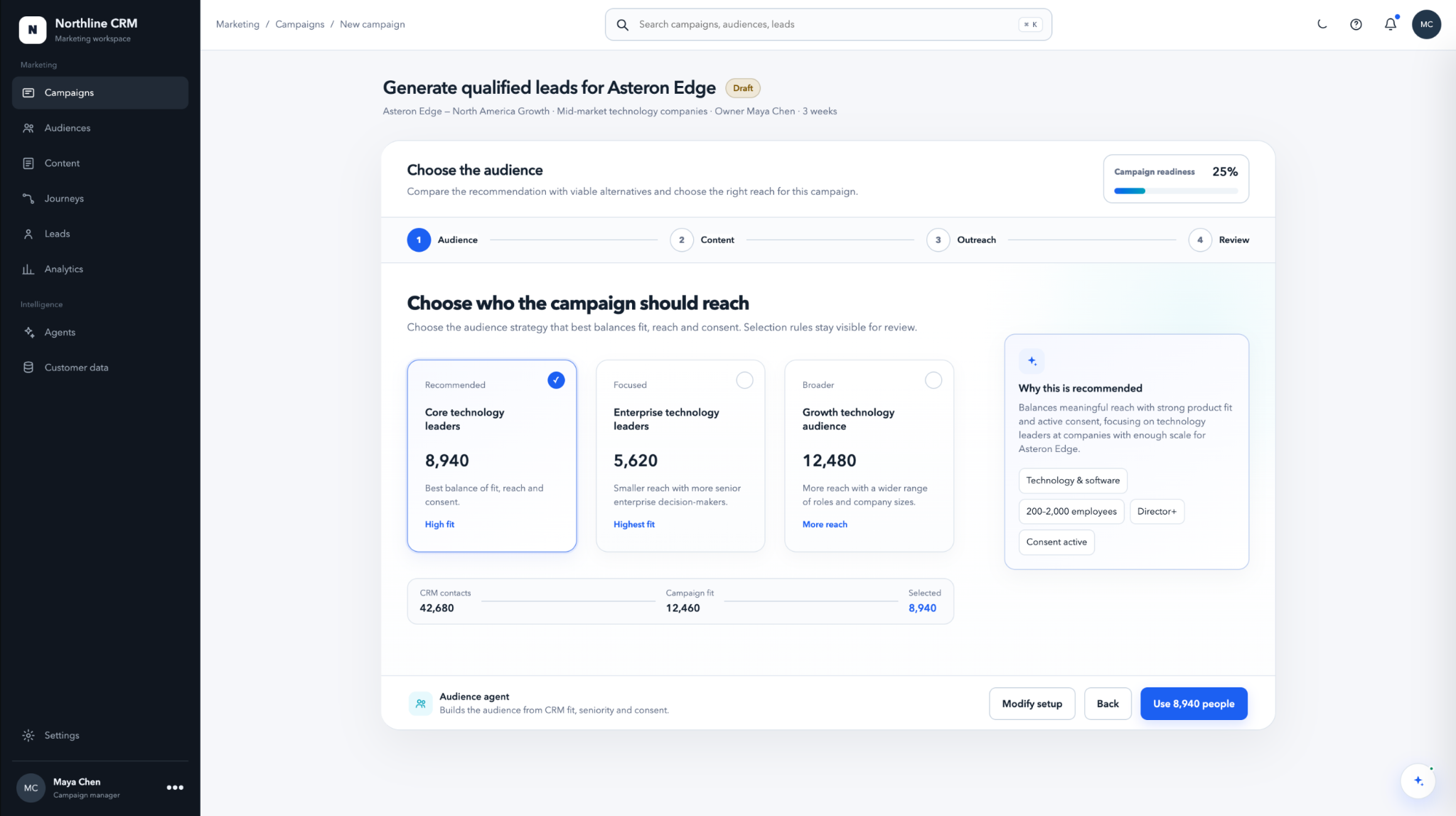
I put the recommendation beside its alternatives so Maya can compare fit, reach and consent before choosing an audience.
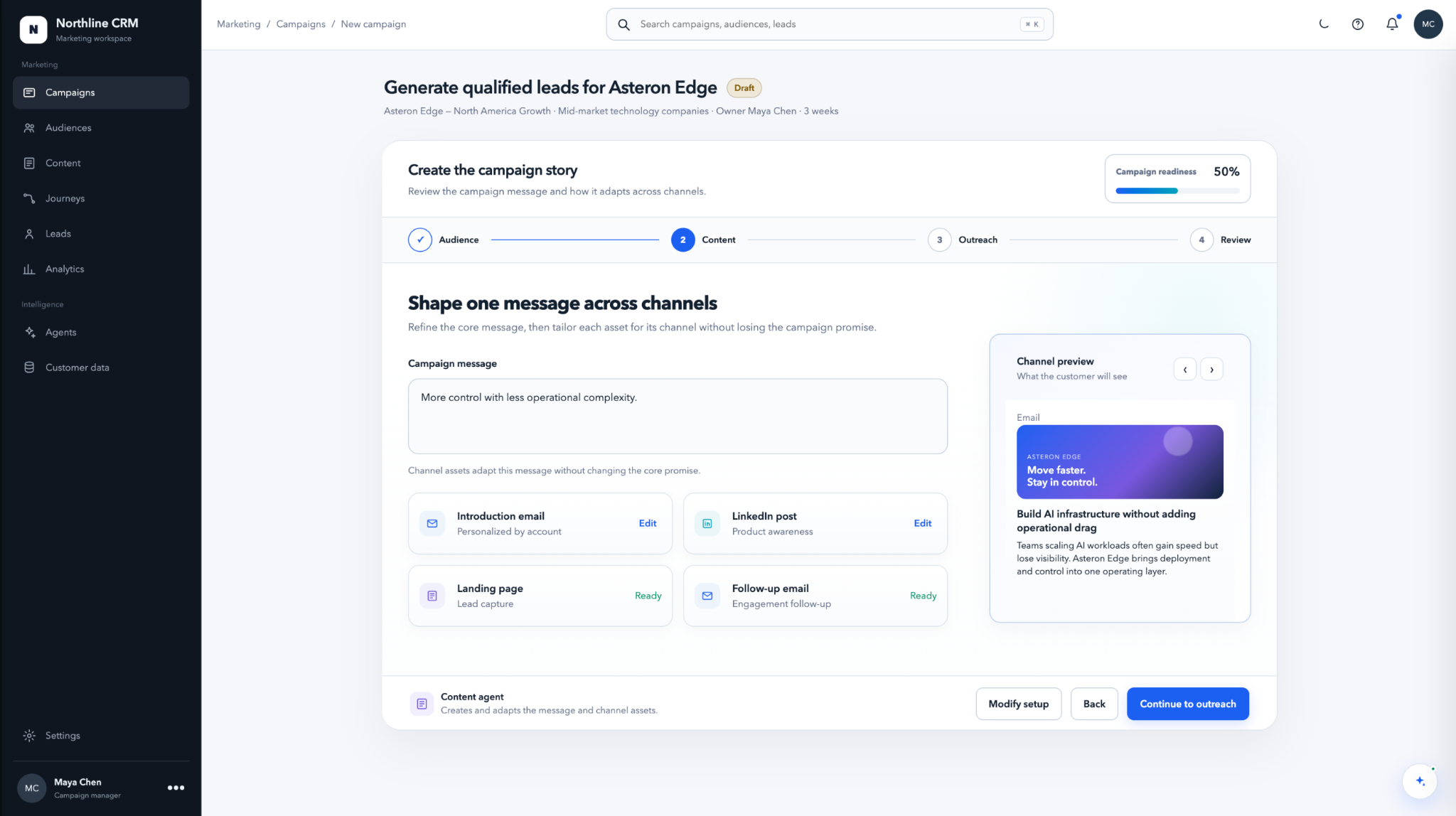
Every asset starts from the campaign message. Maya can edit its template, tone, media and copy, or revert generated changes.
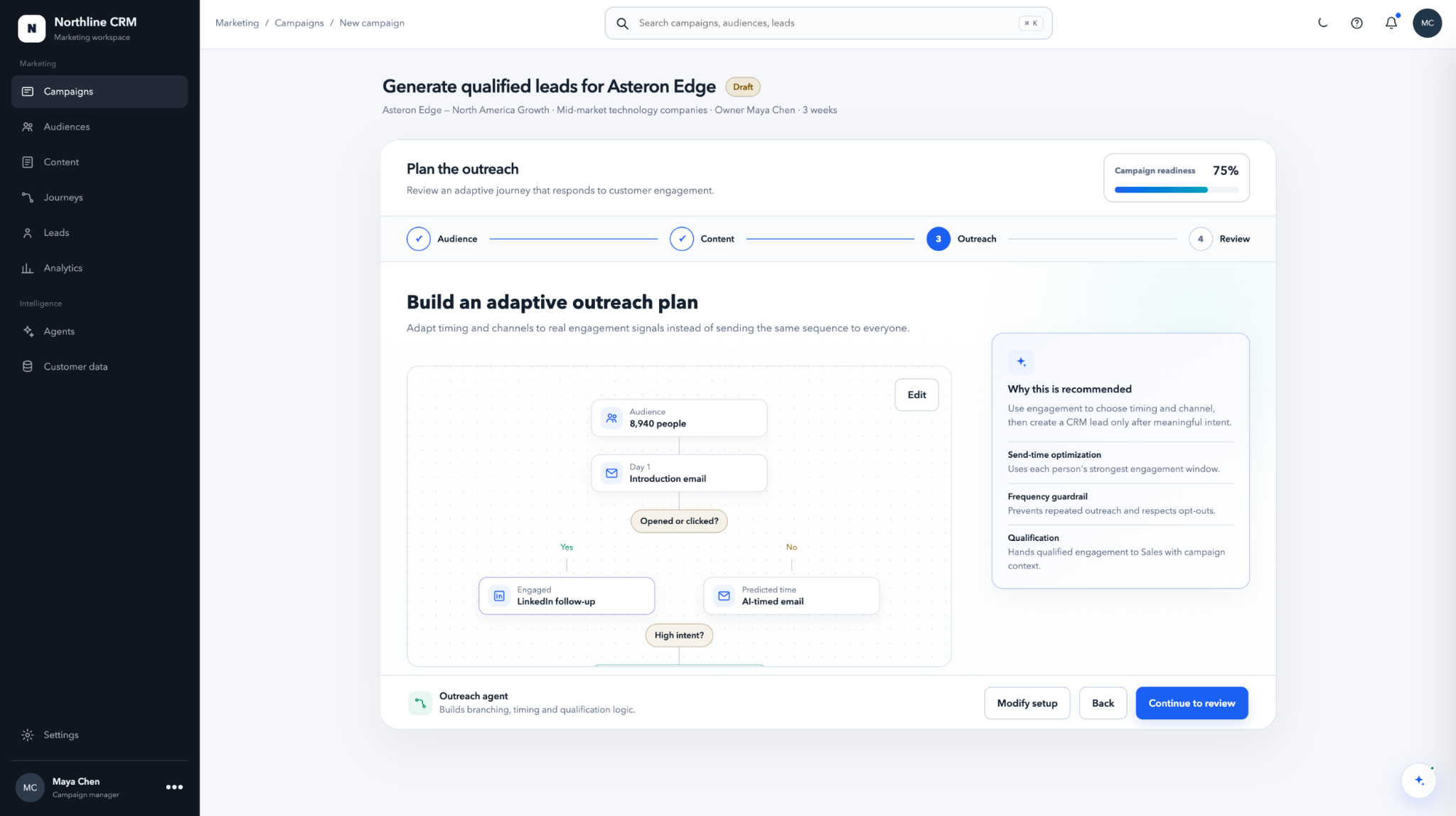
I made the journey editable on screen. Nodes show each action, and connectors let Maya insert a step where it belongs.
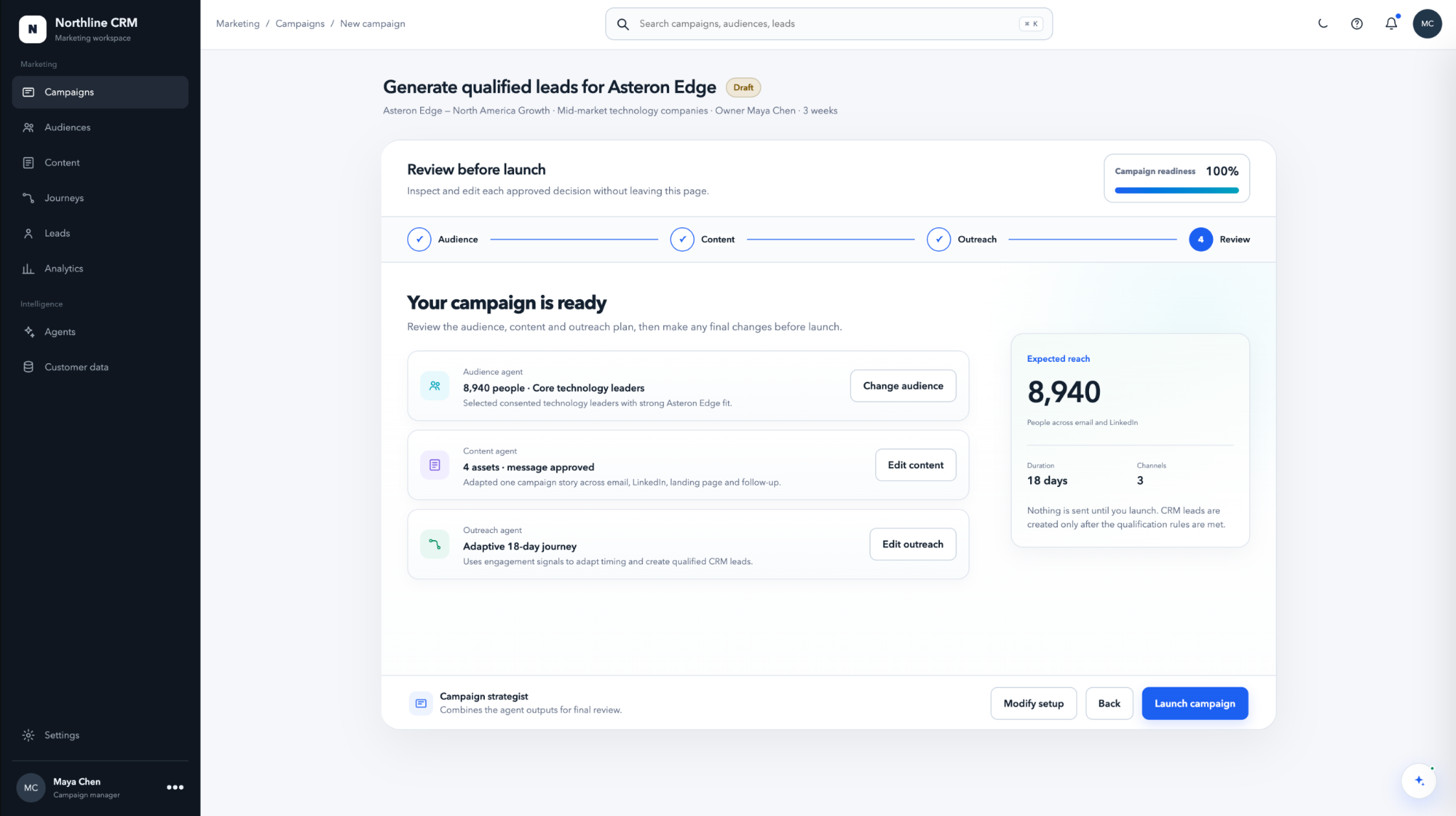
The final review brings audience, content and outreach together so Maya can check that they still agree.
Her CRM has the data and the business has the intent. Northline prepares the campaign across audience, content and outreach, then brings Maya into the moments where her judgment changes what customers will experience.
Start with intent
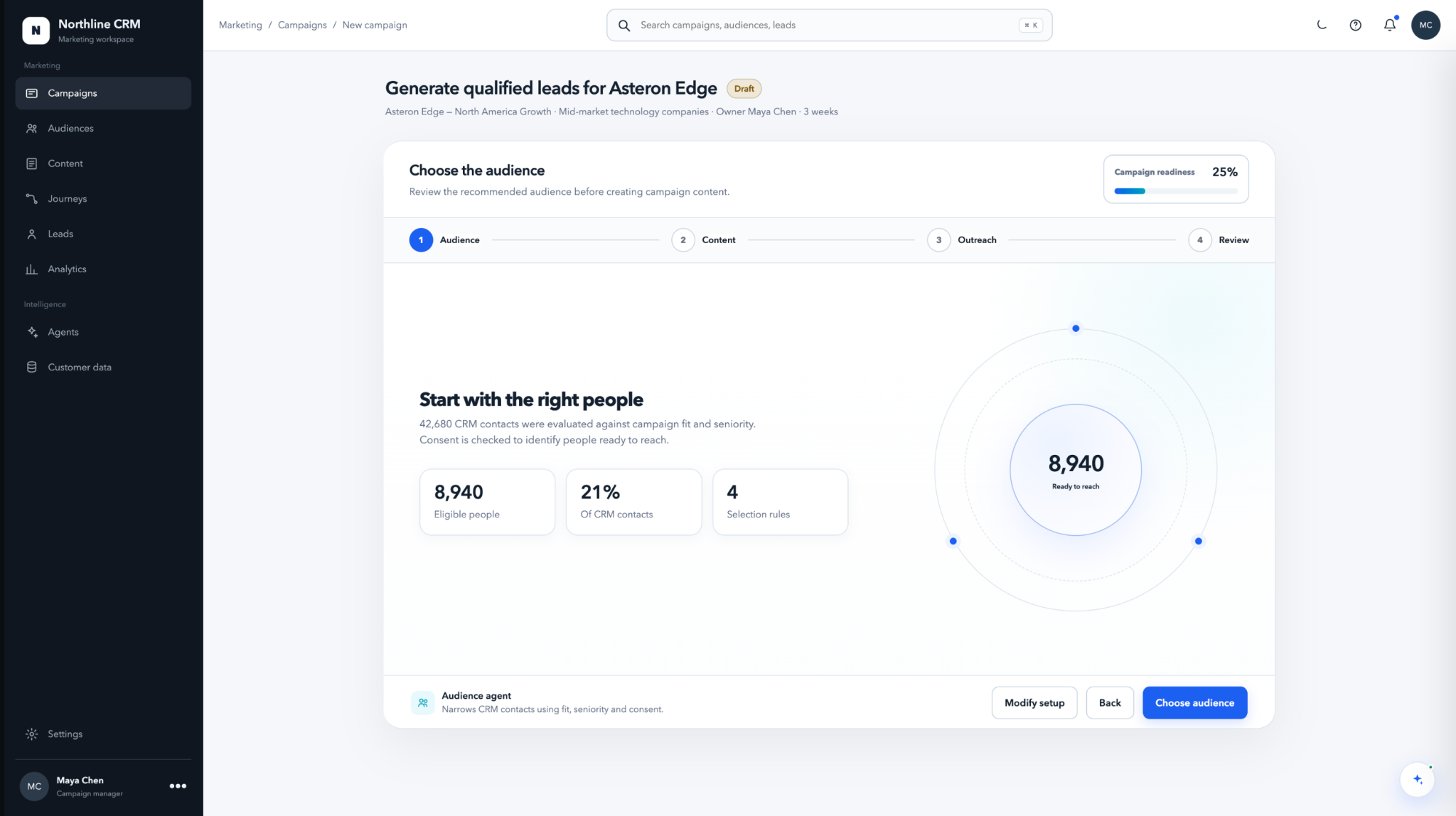
Maya sets the outcome once. Strategy frames the direction, then the same context flows into audience, content and outreach. She is not asked to restate the brief every time responsibility changes.
Make the trade-offs
Audience evaluates CRM fit, reach and consent before Maya arrives. Instead of asking her to trust a score, Northline keeps alternatives and the rationale in the same decision frame.
Shape the campaign
Content establishes the core message, then Maya can tune the channel execution without losing the promise that ties the campaign together. Reversible generation makes exploration safe.
Inspect the journey
Outreach exposes timing, branches and qualification as a journey. Maya can understand how a person moves through the campaign before the sequence is activated.
Commit with context
Review reconnects audience, content and outreach before launch. Maya can see what the system prepared, what she changed, and what will actually go live.
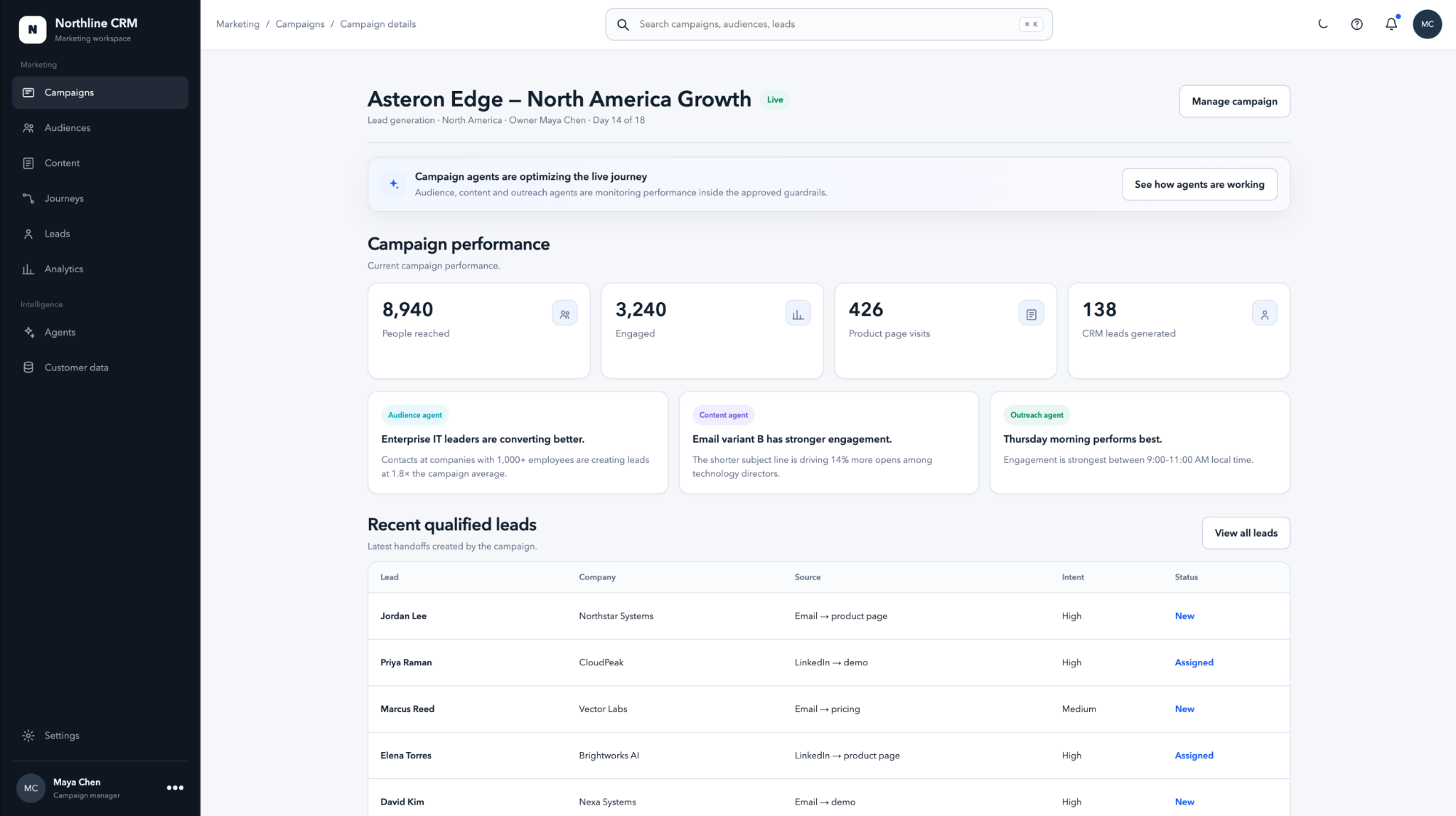
Learn after launch
Once the campaign is running, Maya can see reach, engagement, product-page visits and qualified leads in the same context as the campaign decisions that produced them. Agent insights explain what is changing without turning the live experience into another dashboard to decode.
Working prototype
Use the flow below as a guided walkthrough. The prototype is fully interactive; the suggested path simply gets you to the most important decisions quickly.
Product value
Northline carries campaign context into execution and CRM handoff. That creates a traceable line from the audience Maya selected, to the story customers saw, to the journey they experienced, and finally to qualified demand. The prototype numbers below are modeled scenario outputs—not shipped customer results—but they show the measurement model the product was designed to support.
These figures are scenario outputs used to design the live-state experience, not claimed production results. They show how the product could connect campaign decisions to measurable customer movement and qualified CRM handoff.
Design reflection
Giving each agent a defined job helped me decide where to place review points. A shared brief kept the work consistent, while the final review let Maya check the campaign as a whole.