Guest context is scattered.
Preferences, arrival details and service history live across different tools.
CostStaff look up the same details again.
StayFlow connects guest details with hotel operations. Agents coordinate routine updates within hotel rules and ask staff to review exceptions.
Hotel teams use separate systems for reservations, rooms, transport and service. They often have to copy or explain the same guest information at each handoff. I explored how agents could coordinate those updates within hotel policies and ask staff to review exceptions.
The information usually exists, but it is spread across systems and teams. Each handoff adds interpretation, follow-up and another chance to lose context.
Preferences, arrival details and service history live across different tools.
A simple update becomes repeated reading, checking and forwarding.
Staff have to scan too much work to find what actually needs judgment.
Teams spend time moving information instead of acting on the guest need.
Arrival, transport and room prep live across different teams.
Routine updates make important exceptions harder to spot.
Staff need to see why an agent acted and whether they need to intervene.
Agents · guest context · brand standards · global policies
Property · staff · rooms · airport · vehicles · vendors · availability
Handle routine work · recommend next actions · escalate exceptions to people
Agents carry the same guest context as work moves between teams.
Agents handle routine coordination quietly. Exceptions get attention.
Show what changed, what the agents handled and why a person is needed.
Automate the predictable. Design for the exception. Keep hospitality human.
Agents check a change against guest details and hotel rules before acting. Staff see the result and any decision that needs their approval.
Say what changed.
Bring the guest, property and operational context together.
Apply hotel rules, permissions and confidence.
Complete routine work—or surface one clear decision.
Show the result of automation and highlight exceptions.
Flight AI 127 is delayed. Transfer and welcome timing have been updated automatically.
No action neededA replacement can be confirmed, but cost is above the approved automatic threshold.
Approval requiredOperations and the assistant use the same guest context without making staff reconstruct it manually.
Three missed delivery windows create a projected premium-room constraint.
Each decision connects directly to something you can see in the prototype.
The system separates product behavior from brand expression. Workflow, hierarchy, accessibility and AI states stay stable; hotel groups can change typography, color, density, radius, surfaces and emphasis without rebuilding the product.
Status labels keep the same meaning across themes.
Color, type and surfaces can change.
Switch the hotel brand. Type, surfaces, shape and components adapt. The workflow stays the same.
The system should understand the guest, property and current operational state before proposing anything.
Confidence is not enough. Actions also need permission, hotel rules, cost and service-risk checks.
When a person is interrupted, show the trigger, downstream impact, recommendation and decision needed.
Automation should be inspectable, reversible where possible and clearly owned.
I would measure manual handoffs, time to resolve exceptions and time spent coordinating work.
Use AI to protect staff attention so people can spend it on empathy, judgment and memorable service.
A flight signal shows the guest is now expected 62 minutes later.
Returning VIP · airport transfer booked · suite readiness known.
Pickup timing, room readiness and the welcome plan move together across the relevant teams and tools.
No extra cost, capacity issue or hotel-rule conflict—so the agents can proceed within their approved boundaries.
If a driver is unavailable, cost crosses a limit or service risk rises, the agents stop and ask for a decision.
This scenario became the test for the design: can AI agents coordinate the routine work across teams while making the few moments that need human judgment easy to see?
Pre-arrival communication already captures valuable guest intent. StayFlow turns that intent into structured operational context that teams and agents can act on immediately.
The guest writes a reply. Staff turn that reply into operational work.
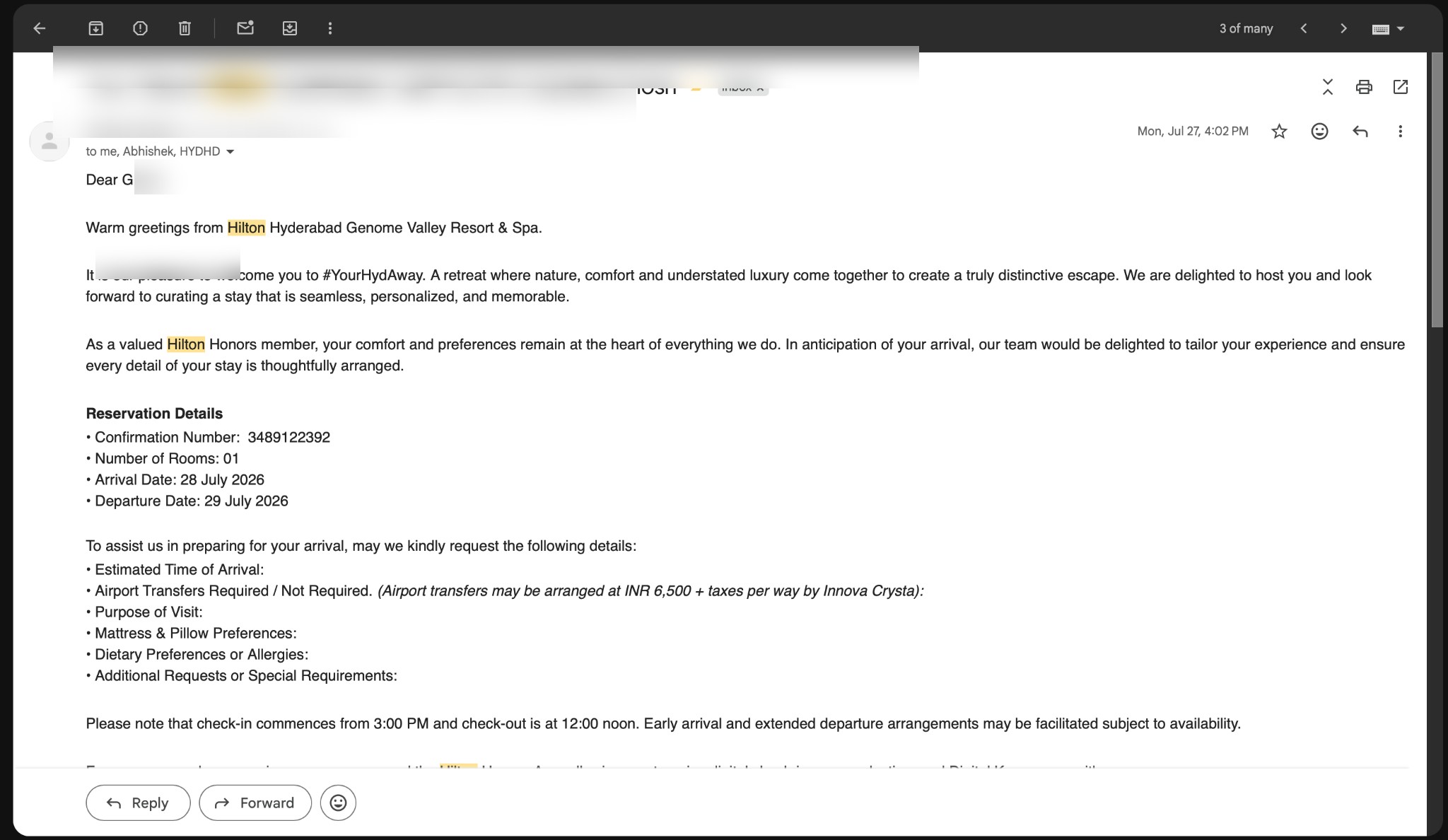
Most answers are taps. The agent receives structured context instead of another email to decode.
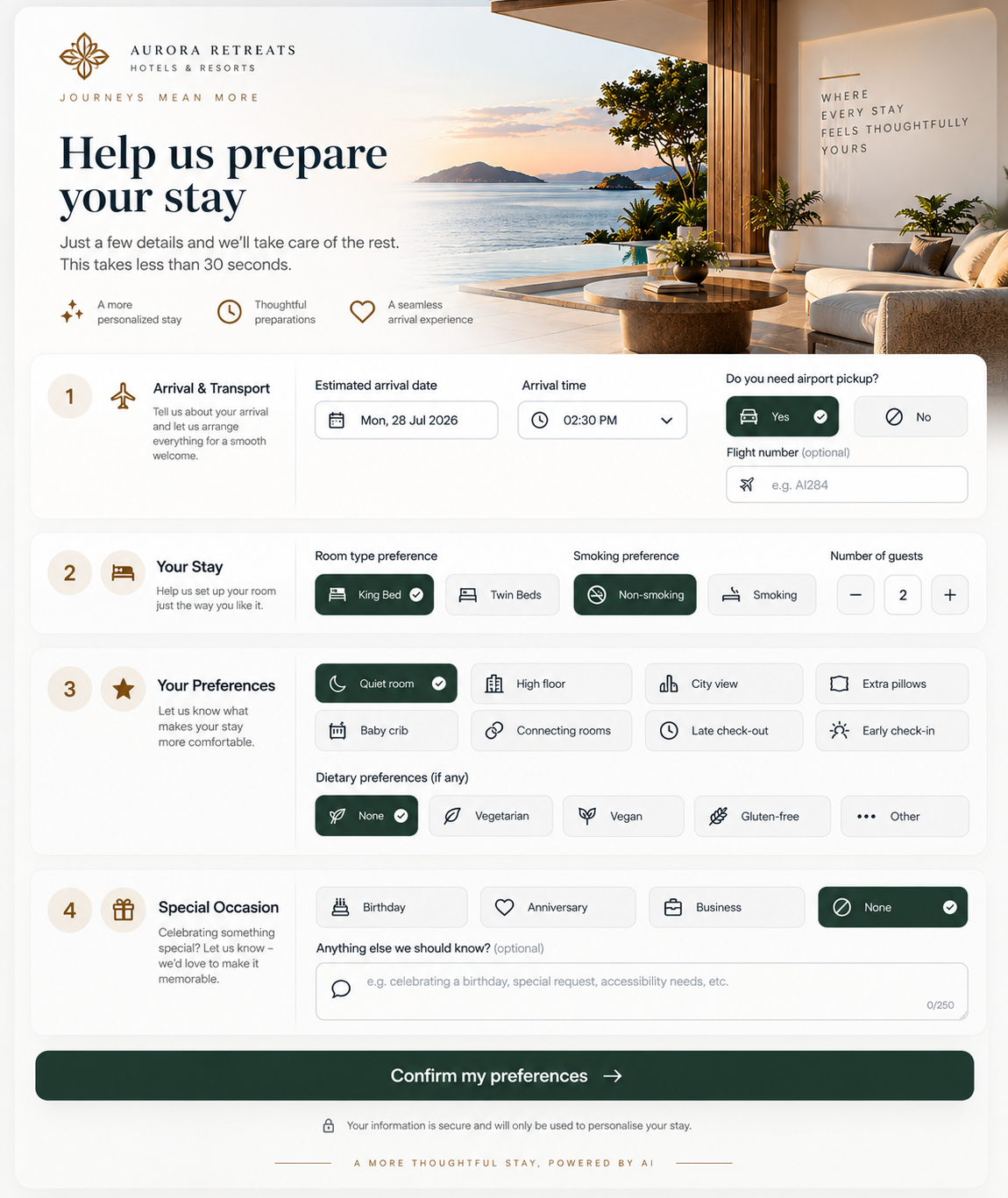
Tap the preference instead of composing a long reply.
The response is already structured for the operating system.
The same intent can trigger transport, room prep and concierge work.
The Mother Agent checks reservation context and hotel rules, then coordinates specialist agents for transport, room preparation and concierge work. Staff are brought in when a decision crosses an approved boundary.
See how AI agents coordinate routine work behind the scenes, surface the moments that need human judgment, and stay governed through the administrator experience.
Start with the hotel team’s view. See AI agents carry guest context, coordinate routine tasks across teams and surface only the exceptions that need a person.
Tip: this demo instance retains its in-product brand, but the case study describes the underlying platform as configurable for any hotel group. All left-navigation tabs are now routed internally inside the embedded demo.
Switch to the administrator’s view to see how AI agents are monitored, tested, bounded and approved before they coordinate work across properties.
The admin reviews performance, property readiness and agent permissions.
The prototype focuses on one reusable Airport Transfer Agent moving safely into a new property.
The design aims to reduce the coordination staff do between systems. Agents handle routine updates, while staff decide how to respond to exceptions and guest needs.
AI agents carry connected guest + hotel context between workflows instead of asking staff to copy it between teams.
Agents handle routine coordination and bring staff in when a decision needs judgment.
Reusable agents work across properties while local hotel rules, permissions and capabilities stay local.
Preferences become usable context instead of another request to repeat later.
Pickup, room preparation and service can adjust before the guest has to ask.
AI agents handle coordination so staff can spend their attention on empathy, judgment and the guest experience.
of travelers surveyed were interested in hotels using AI to better tailor services and offers.
Oracle Hospitality consumer researchof hoteliers in a cited hospitality survey agreed personalization boosts reputation and repeat business.
Deloitte / Mewsmore value placed on personalized hotel service by Gen Z travelers than baby boomers in McKinsey research.
McKinsey Travel Loyalty SurveyStayFlow is designed to reduce manual handoffs between hotel teams, giving staff more time to prepare for arrivals and respond to guests.